a forest is not just trees
We were recently pitched a scheme to offer carbon neutral shipping, so we decided to compare it with Canada Post’s carbon neutral shipping that we currently use.
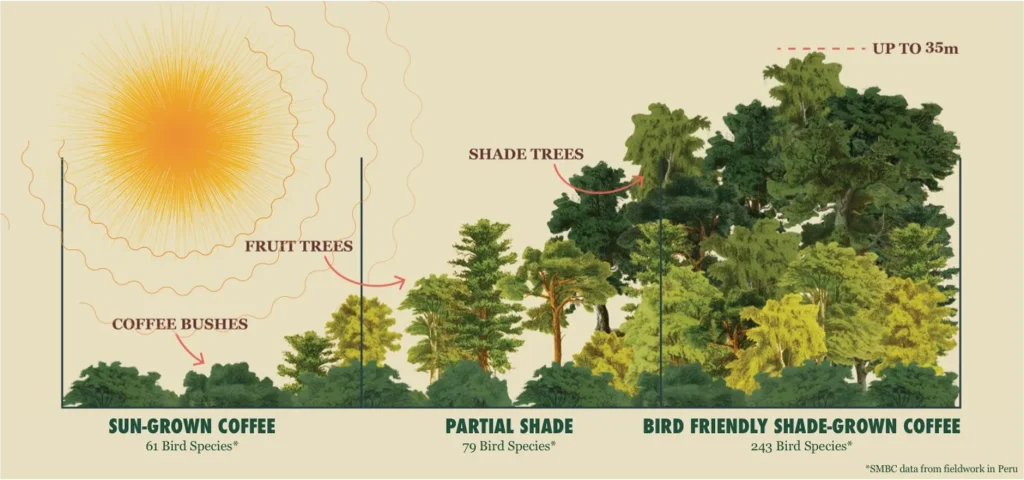
Given our background with Bird Friendly coffee, we smelled greenwashing. From the Smithsonian Migratory Bird Center’s Bird Friendly Coffee criteria, we learned about some characteristics of a healthy agro-forest… one that provides crops for people AND that continues as a healthy forest ecosystem. The criteria describe the traditional way of cultivating coffee beneath a diverse cover of native tree species.
But the shade is NOT the goal… the term “shade-grown” is intended as a proxy for the entire forest ecosystem… the interactions among all of the living participants of the ecosystem. The homes and food for living plants, fungi and creatures are provided by other living plants, fungi and creatures, which are the living homes and food for still others and so on. The biodiversity in a healthy forest IS the FOREST ITSELF!
So what is carbon neutral shipping anyway?
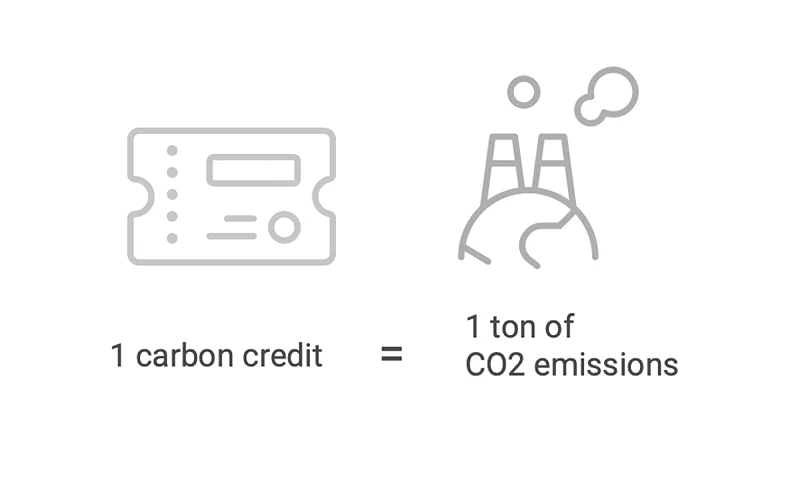
Carbon neutral shipping offsets the carbon used in shipping transportation with “carbon credits”. Carbon credits provide incentives for projects that mitigate increasing greenhouses gases in the atmosphere. These mitigations can be
- reducing emissions such as retrofitting houses or
- sequestration such as reforestation
Viable projects are funded by companies who want to balance the harm of one aspect of their business with the good works in a carbon project. The carbon emissions/sequestration is verified and audited to quantify the benefit in terms of carbon.
So carbon neutral shipping means that the emissions caused by vehicles in shipping are offset by funding Carbon Projects that draw down or directly reduce emissions of greenhouse gasses.
So how does Canada Post’s carbon neutral shipping compare with the that was pitched to us: Fazenda Boa Vista in Brazil?
Canada Post's Great Bear Project compared with The pitched scheme
Great Bear Rainforest
“The Great Bear Forest Carbon Project – led by nine coastal First Nations – is the world’s largest forest carbon initiative. These forests represent one quarter of the world’s remaining coastal temperate rainforests. Keeping ocean and forest ecosystems healthy is the key to preserving the way of life [of coastal First Nations].”
Fazenda Boa Vista is a Tree Farm
The pitch: “Grow this forest with carbon neutral shipping!”
“Financing reforestation and other projects that remove carbon in the atmosphere.”
A project with a narrow goal while utterly missing the opportunity to regenerate the rainforest.
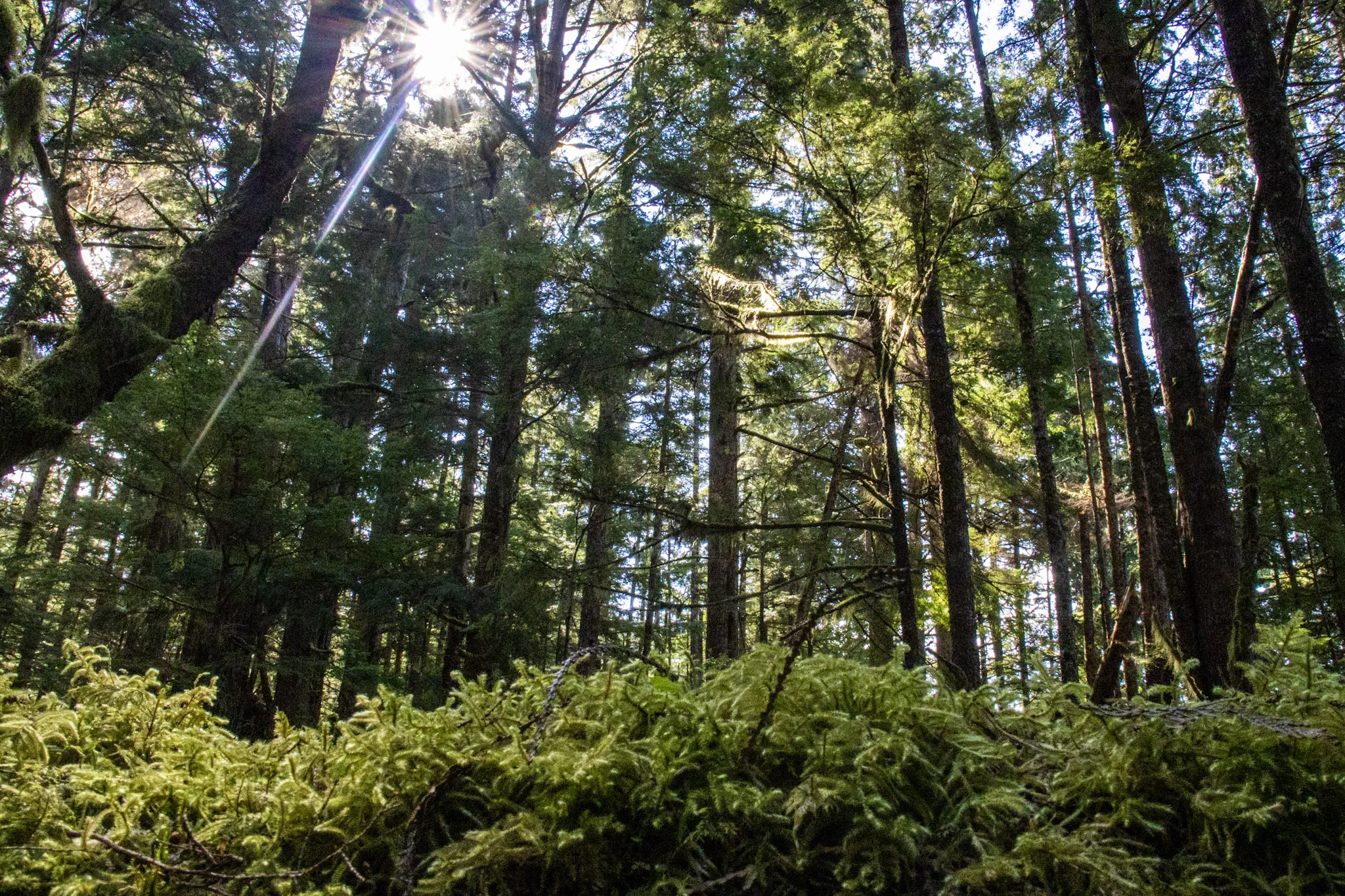
Coastal First Nations is a unique alliance of First Nations along BC’s North and Central Coast and Haida Gwaii. Collectively and together they preserve the ecological integrity of the 6.4 million hectare Great Bear Rainforest.
Once headed for imminent demise under relentless pressure of unsustainable logging, revenue from carbon offsets is used to manage conservation efforts while shifting to sustainable forestry practices. Shellfish and seaweed aquaculture projects are also being established.
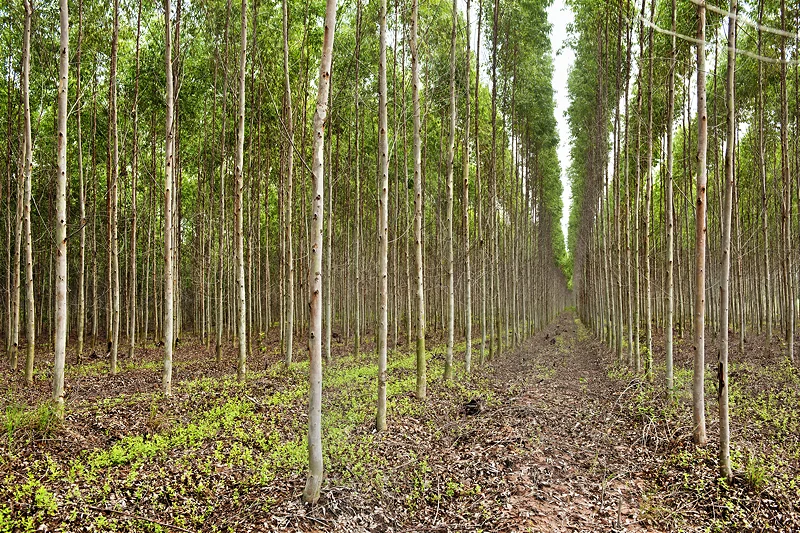
This is a monoculture of non-native eucalyptus trees in Brazil! It is the worst kind of greenwashing: an eco-desert with a single non-native species that will eventually be harvested for lumber.
When I pointed this out, I was told that it was an improvement because the rainforest was previously clearcut for raising cattle. The cattle left the land barren and with ruined soil and poor water retention. But instead of restoring the rainforest, they did this.
Great Bear: an ancient natural forest system
Fazenda Boa Vista: non-native trees in rows
A tree farm is not a forest
We need to be careful about understanding what is said so we can distinguish greenwashing claims from reality. It is true that Fazenda Boa Vista is capturing the carbon that it claims to capture. We know this because it is audited by qualified and reputable auditors. BUT we must become aware that the lumber industry calls tree farms forests.
While writing this post I happened upon a poem in Substack by Rob Lewis. His poem speaks for the forests simultaneously teaching us and evoking our emotion. Reading it, I feel the life of the forest and the empty husk of the tree farm.
The Forest
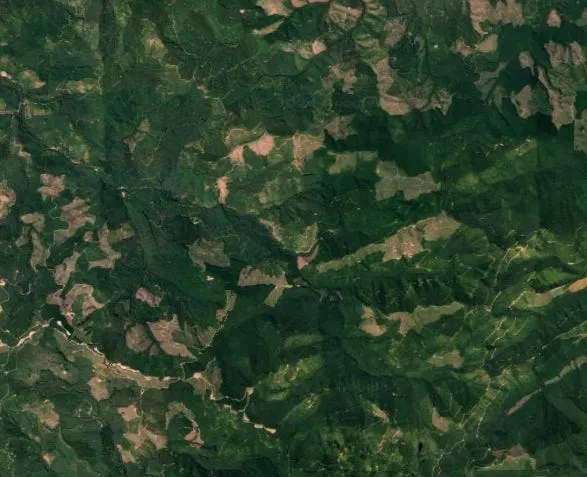
The above image looks down on “forested” land not that far from where I live in the northwest corner of Washington State in the US. It is an example of what is called “working forest,” and you can clearly see the work being done to it, but none of it is forest. A forest is a community naturally grown over time. What we see above has likely all been converted to timber planation, monocrops of selected species, like Douglas Fir, which grow fast and yield the greatest monetary return, cut on 40-60 year cycles. In the darker patches, there may be scraps of forest not yet replanted, but without the public finding those places and fighting to save them, it’s just a matter of time.
Fortunately, just such a movement exists in these parts. Using satellite imagery, people around here are identifying the last remaining, unprotected shreds of true forest and fighting for them. It’s one of the most inspiring things I’ve ever been a part of. Occasionally I’m asked to read a poem or two at an event. This poem, The Forest, speaks to the yawning gap between true forest and industrial plantation.
a poem about forest ecology by Rob Lewis
The Forest

Carbon?
     I know how it tastes.
It is my bread, my breath, my body.
Wander under my branches
     and you will hear carbon sing.

Climate?
     I grow it.
I turn the wheels made of water
and dream clouds into rain.
Coolness, moisture and calm
are beams of a building
I make out of time.

Time, Earth-time, life-into-death time
is the only time I know.
My firs must grow old
for the branches to break off
and call out the hungers
the chewers and crawlers
making banquet for flickers
drilling nests for bluebirds
hollowing out homes for owls.

When you stand in me
that hallowed feeling you get
that is from the hollows.

My cedars need time too, long, long time
for the chambers to form
for the quiet inner disintegration
to hollow heartwood to den-home
becoming womb for bear.

And when they finally fall
time is freshened yet again
as wood turns to sponge
soaking up rain, sprouting hemlock
growing amphibians.

Plantation sameness now
marches over the hills
young trees shoulder to shoulder
bred and born for labor
     without womb, without elders.

There I can’t live, and the fires
the withering creeks
are only the most obvious
symptoms of my absence.

I can save your climate
make it mine again.
But you will have to let me.